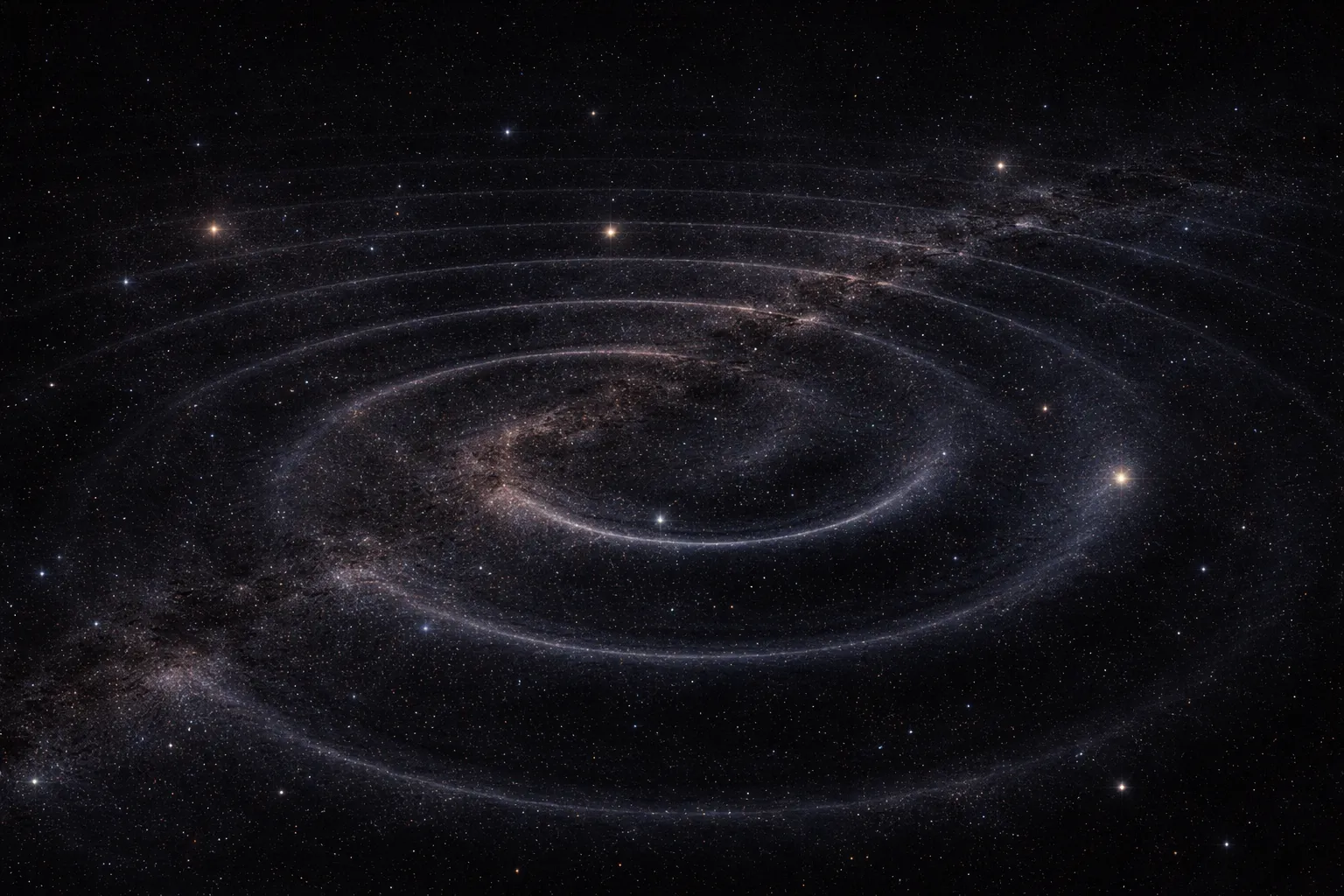
For most of human history, astronomy meant one thing: looking. We studied the universe through visible light, then radio waves, X-rays, infrared, and other parts of the electromagnetic spectrum. In 2015 that changed. The Laser Interferometer Gravitational-Wave Observatory, better known as LIGO, detected a signal that did not arrive as light at all. It arrived as a ripple in spacetime itself. A prediction Einstein made in 1916 had finally become an observation.
What LIGO actually is
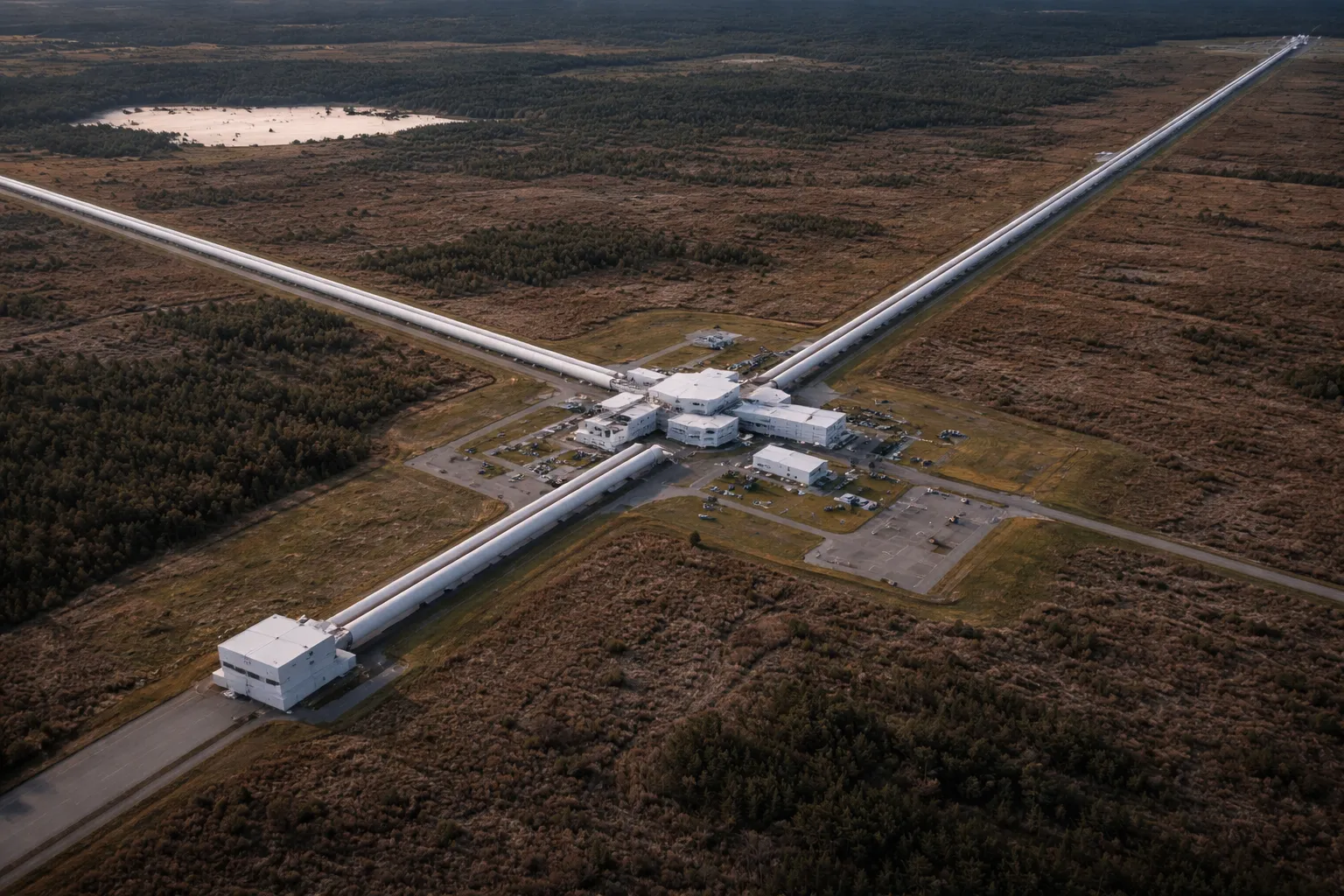
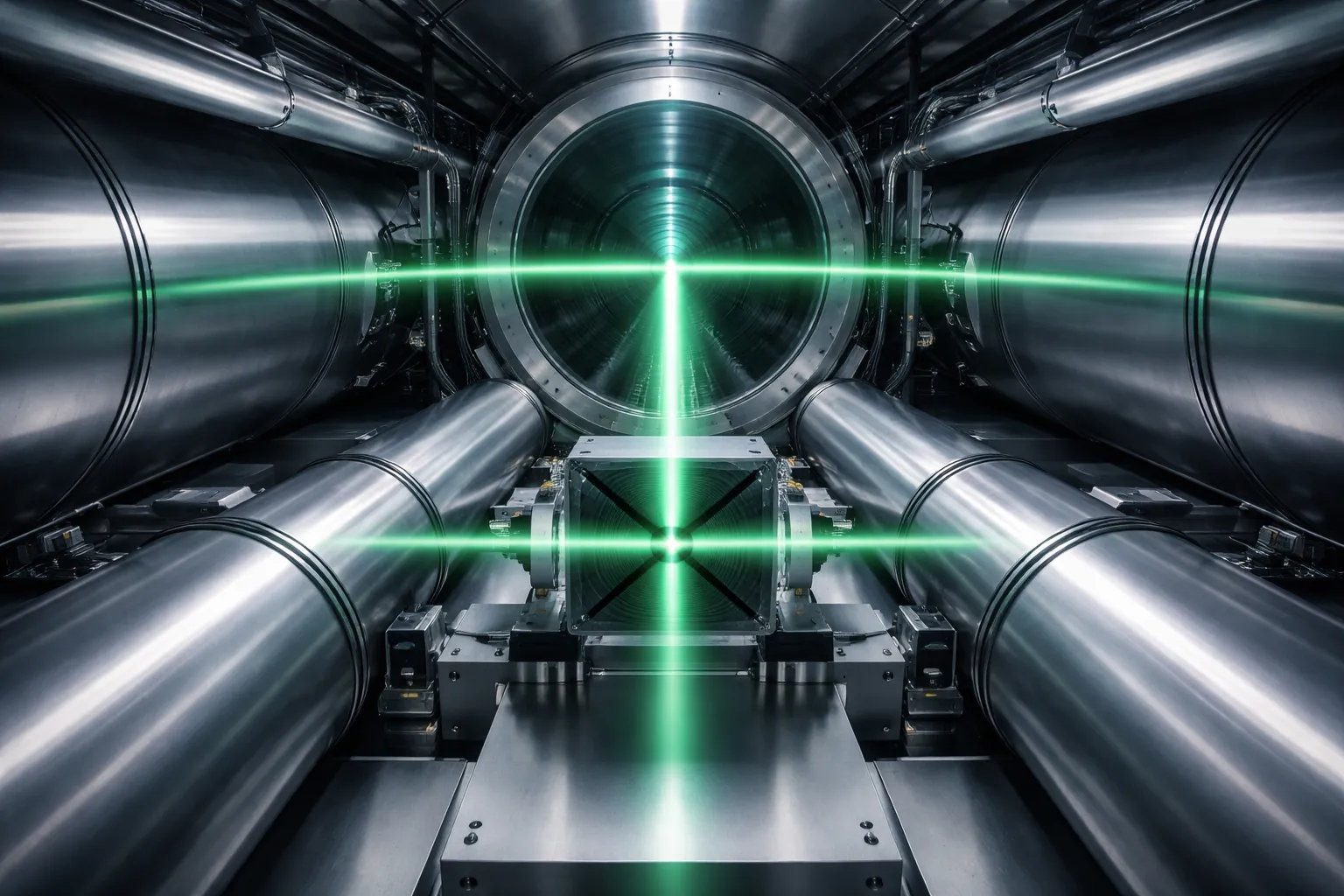
LIGO is not one telescope but a pair of enormous interferometers in the United States, with 4-kilometer-long arms arranged at right angles. Laser light travels up and down those arms and recombines. If a gravitational wave passes through Earth, it changes the distances by absurdly tiny amounts, stretching one direction while squeezing the other. That alters the interference pattern of the lasers, and the instrument records the change.
The challenge is that the effect is unbelievably small. Passing trucks, earthquakes on the other side of the planet, thermal motion, and quantum noise all try to bury the signal. LIGO works only because the engineering is ferociously careful. Vacuum systems, vibration isolation, mirror suspensions, and statistical analysis all have to cooperate. The measurement is not impressive because it is big. It is impressive because it is nearly impossible.
What happened in 2015
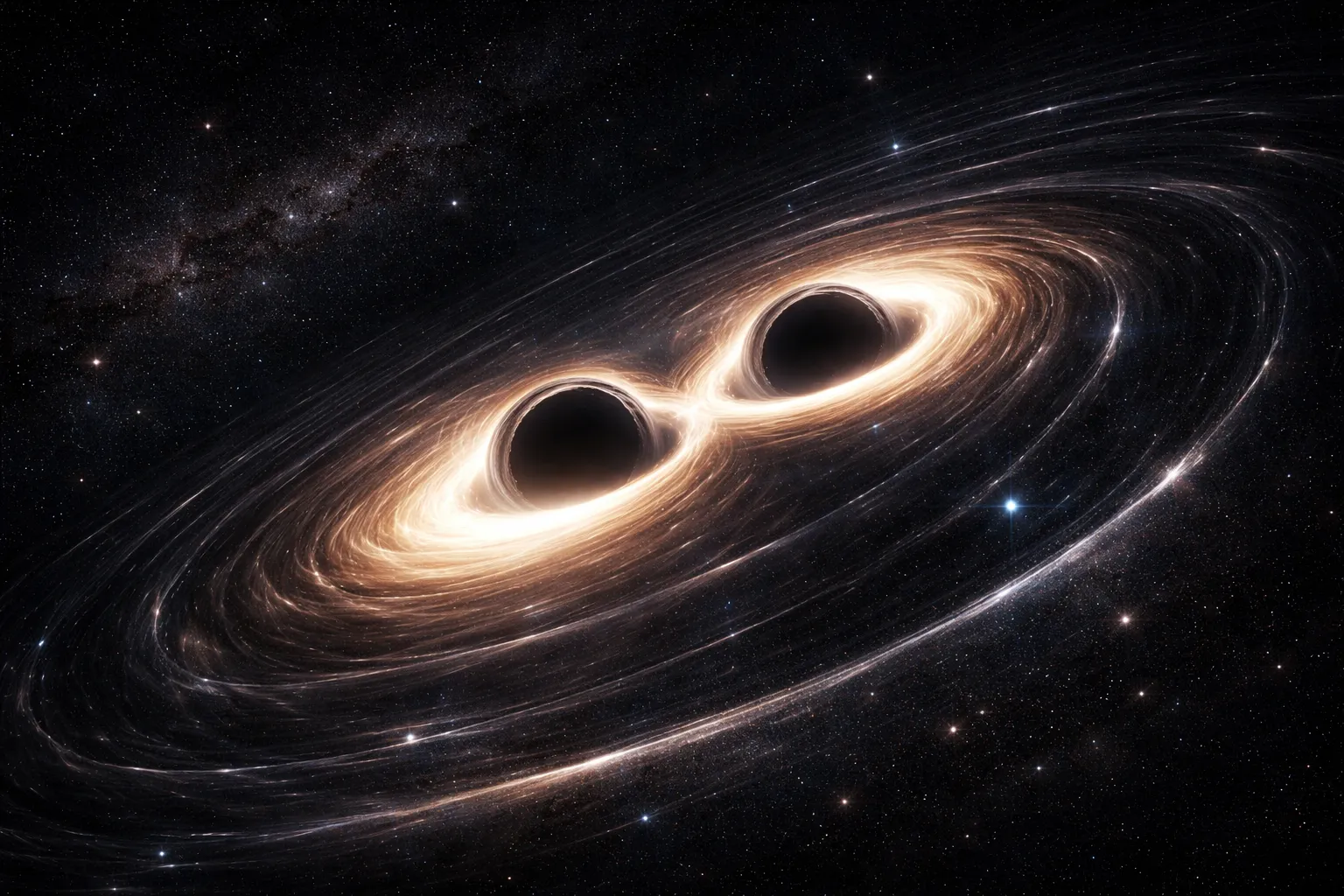
The first detected event, announced in 2016 and known as GW150914, came from two black holes about 1.3 billion light-years away. They had been orbiting each other faster and faster, losing orbital energy by radiating gravitational waves, until they finally merged. The signal that reached Earth lasted roughly 0.2 seconds in LIGO’s most dramatic band. In that brief chirp, the frequency rose as the black holes spiraled inward and collided. The sound people often hear in explainers is not the raw universe literally making noise in air. It is the signal translated into audio so we can experience its shape.
What LIGO measured was a distortion on the order of 10^-18 meters in its mirrors. That is smaller than a proton by far. If you want a sense of scale, it is like measuring a change in distance between Earth and the nearest star to less than the width of a human hair. This is why the detection felt like a turning point. It proved that human instruments could register events not by the light they emit, but by the way they shake spacetime itself.
Why this opened a new astronomy
Light can be blocked, absorbed, scattered, or never emitted in the first place. Gravitational waves give us another channel. They let astronomers study black hole mergers directly, probe neutron star collisions, and test gravity in extreme conditions. In 2017, when detectors caught waves from merging neutron stars and telescopes also found the light from the same event, astronomy entered the era of multi-messenger observation. The universe could now be seen and heard together.
That is the lasting importance of LIGO. The 2015 detection was not only a confirmation of Einstein. It was the birth of an instrument category that lets humanity sense phenomena once thought unreachable. Gravity waves turned violent cosmic events into data. They also did something rarer: they changed the emotional texture of astronomy. The universe stopped being silent.